


How does your organization approach innovation? There are a number of different approaches we see across our portfolio of clients, including:
Even after picking an approach, teams face operational, financial, and strategic realities. Innovation never happens in a vacuum. Product development teams must constantly balance corporate guardrails, including:
When pressed by these organizational realities, teams may be pushed toward cost-optimization methods like Design-to-Value (DTV). Suddenly, a dynamic, human process is reduced to a series of sterile process-driven hurdles.
Even when companies say they follow a given roadmap to innovation (JTBD, Agile, Design Thinking, etc.), that doesn’t mean they all follow a strict, consistent methodology. Some companies don’t even have a defined approach. With B2B companies, it’s not unusual for customer requests or sales teams to drive the R&D and innovation process as voice-of-customer (VOC) initiatives are an afterthought.
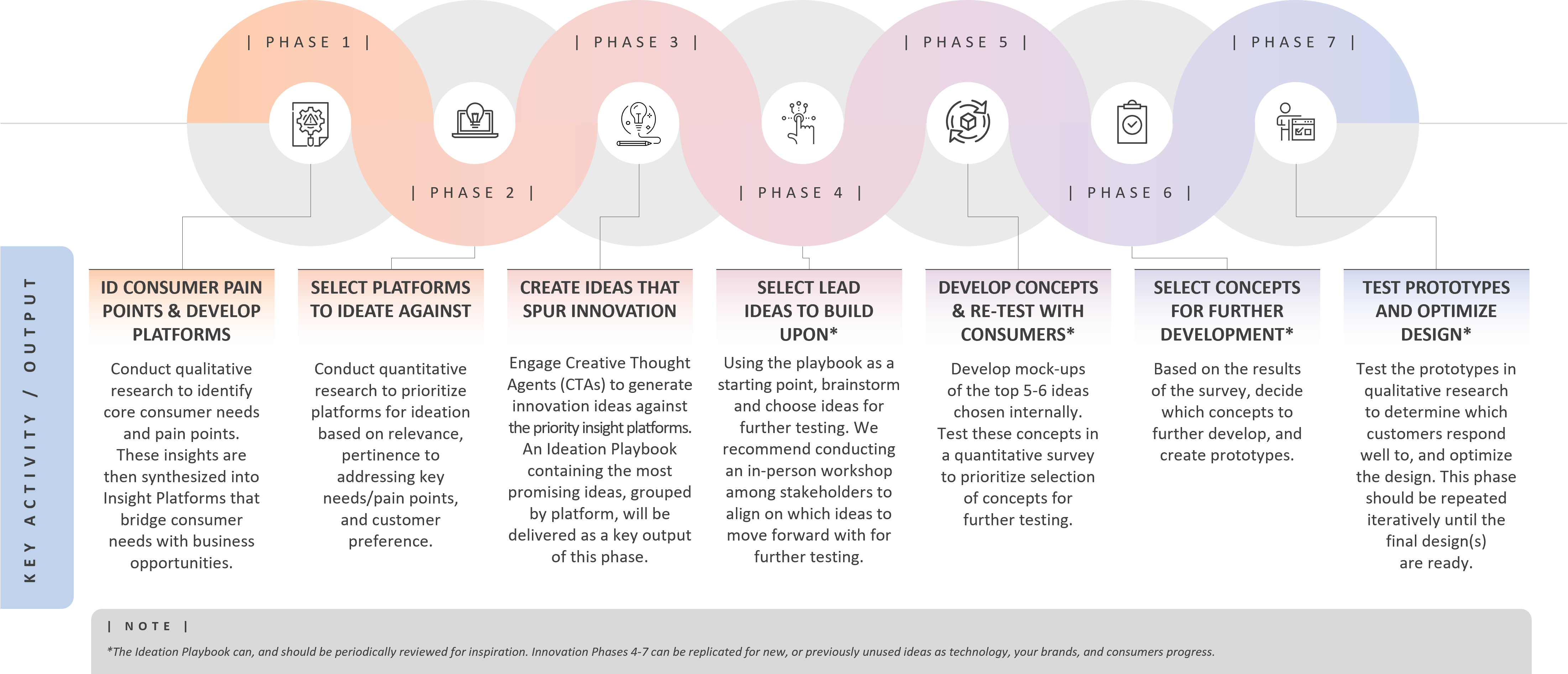
That’s why it’s critical for an insights team and their partners to remain flexible to the needs and culture of the organization during the research design phase. MarketVision views the innovation cycle through a consumer-informed lens. While we often implement a multi-phase research process (below) in partnership with our clients, the key is to adapt to the needs of the organization, product lifecycle, budget, and any other constraints in coming up with the right solution. There is no one-size fits all solution.
Want to talk about your approach to insights within the innovation process or discuss these complex issues within your company? Just connect with a MarketVision client partner.
Contributions by Ben Bruggeman, Brian Dundon, David Santangelo, and Andrew Zoota.


