


Corporate insights teams are currently tasked with a challenging, although not new mandate: deliver faster results, maintain data integrity, and adapt to emerging technologies, all while operating under tighter budget constraints.
At the Corporate Researcher Conference, I shared critical data highlighting how the industry is pivoting to meet these demands. Culled from a survey of seasoned insights professionals (MarketVision’s Clients) averaging nearly 20 years in the field, their presentation outlined the core trends shaping the future of market research.
In addition, Ryan Leonard (Cox Automotive, Inc.), and Srabani Rake (former RJ Reynolds, Kellogg, Coca-Cola, Newell and Bel brands researcher) served as panelists in the presentation, sharing real life experience and their wisdom.
Here are the key takeaways every brand and research partner needs to know.
Researchers report juggling an average of 32 projects a year. Half of all corporate researchers note that 2027 budgets are projected to stay completely flat compared to 2026. Meanwhile, stakeholders are demanding accelerated timelines, pushing researchers into a constant state of "doing more with less".
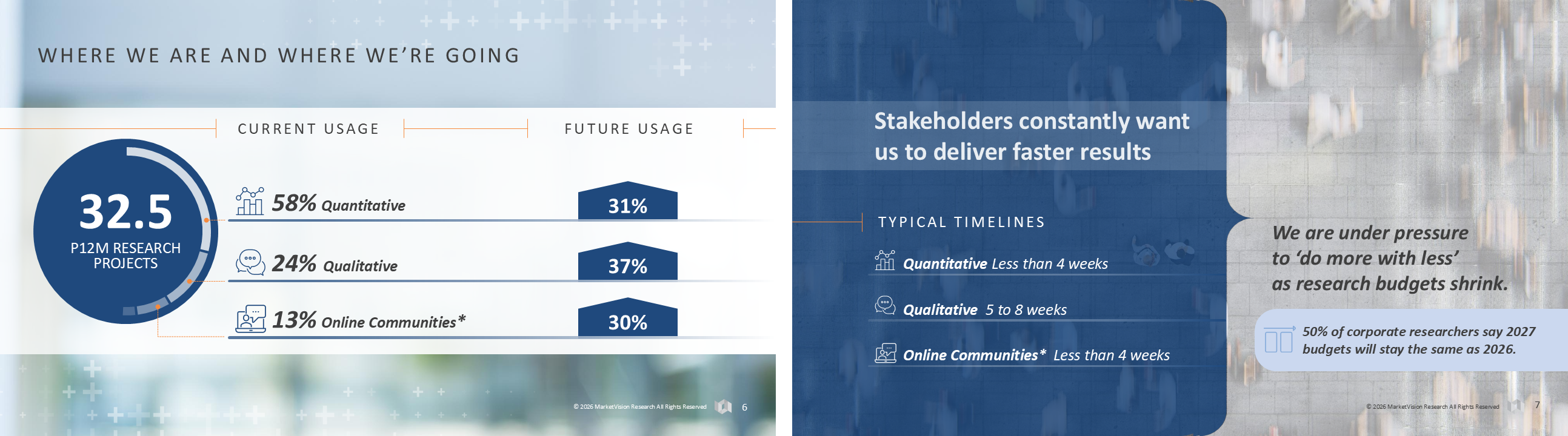
Colleen highlighted this pressure with a striking anecdote from a recent client meeting. In it, a corporate researcher admitted that if she cannot turn around an insights response to her marketing team within 24 hours, they will simply use AI to generate an answer themselves. What does that mean for the future of corporate researchers?
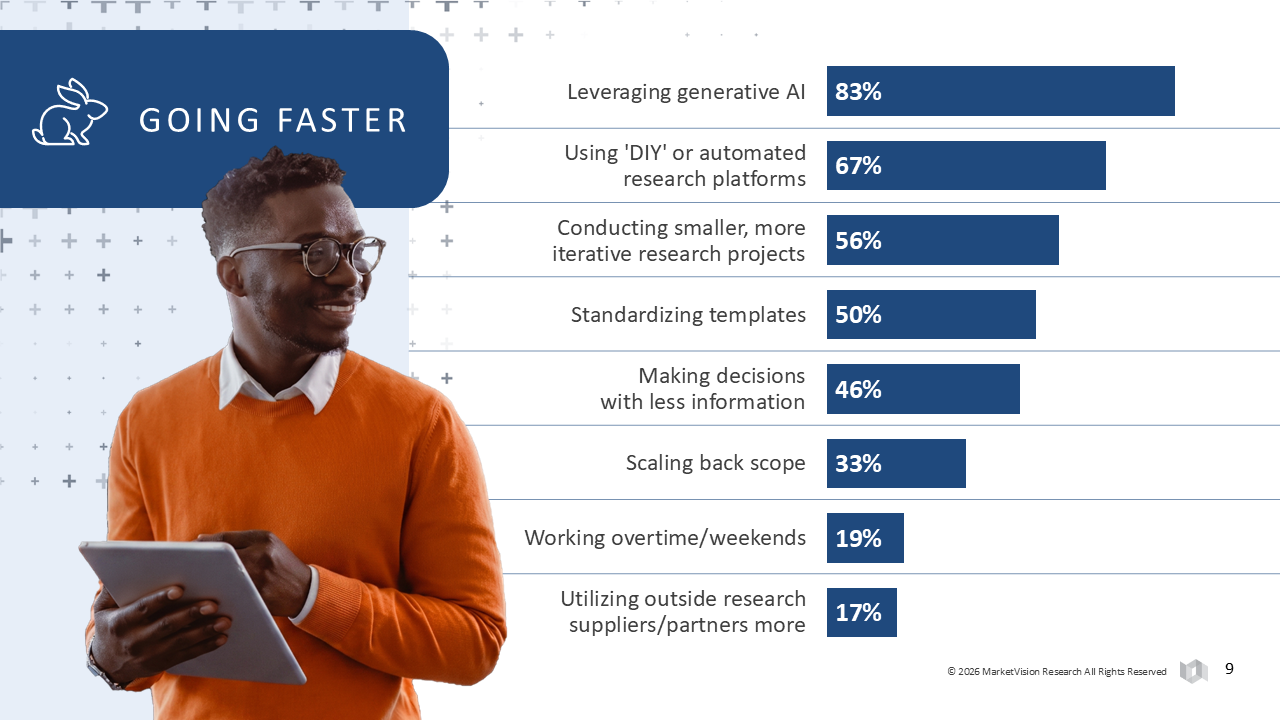
To bypass the traditional 5-to-8-week timelines required for standard studies, teams are radically changing how they work:
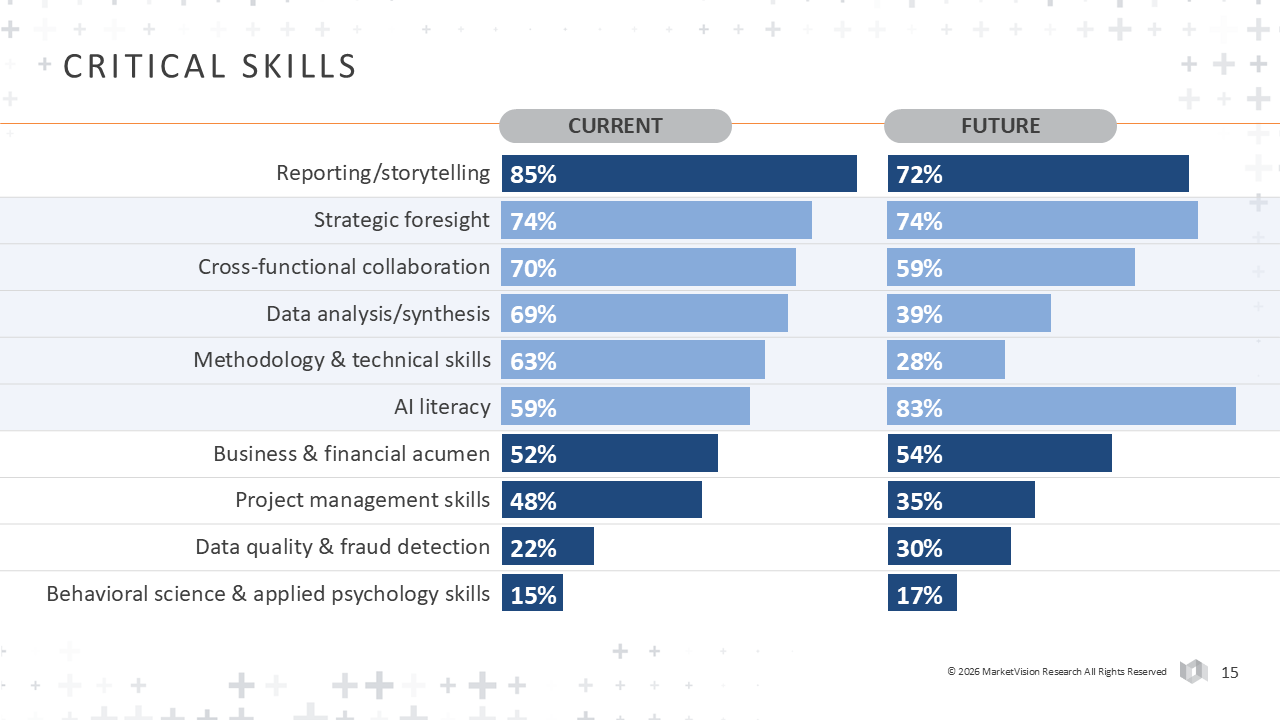
As workflows become heavily automated, the definition of a "critical skill" for insights professionals is fundamentally shifting. Data shows a significant drop in the perceived future importance of traditional technical execution and methodology. Instead, the industry is prioritizing a blend of advanced technological capability and top-tier business consultancy:
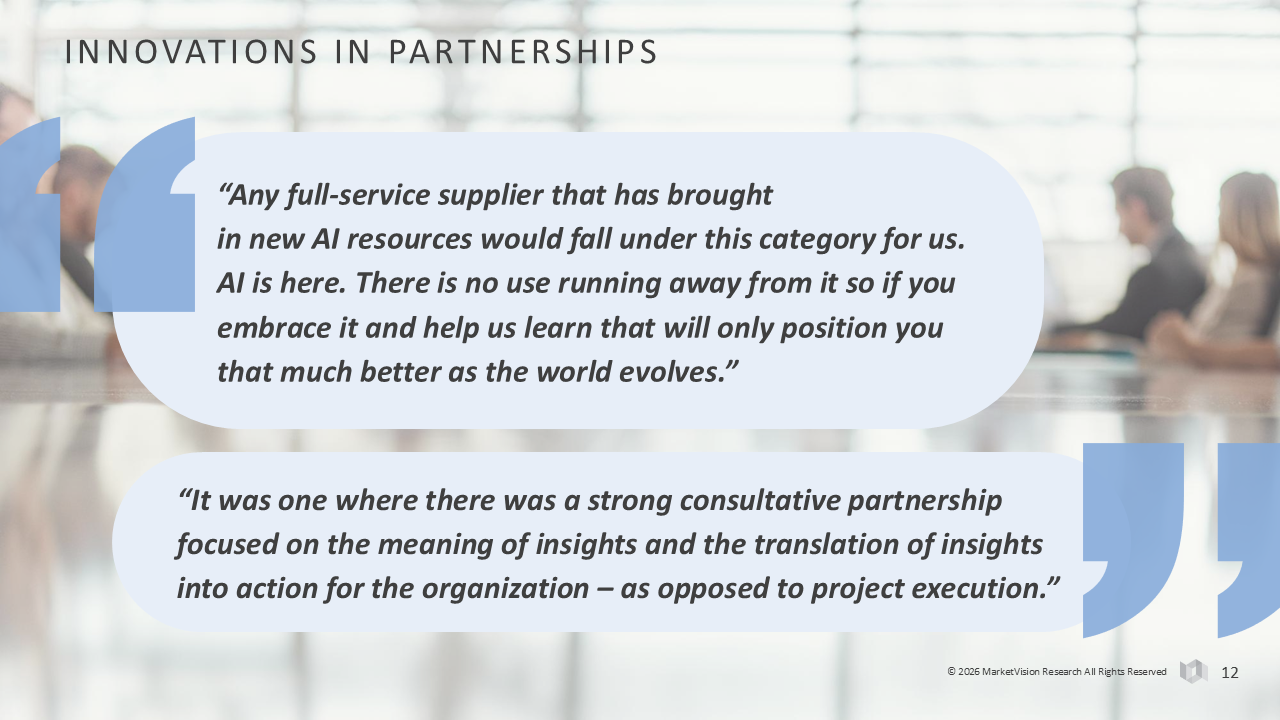
The data sends a clear signal to full-service research suppliers and agencies: the traditional "project execution" vendor model is no longer enough. Corporate teams are actively looking for true partners who can help them navigate financial headwinds and technological transitions.
If you want to stand out to modern insights teams, focus on two areas:
The pathway for our profession, and in a way the industry, seems clear based on the survey and discussion. We all face the daunting task of compressed timelines and heightened expectations because of the environment AI is creating. It’s not enough to use or recognize the value of the new tools, we must demonstrate comfort and expertise in this space as we navigate the challenges of an evolving expectations landscape. More support is needed for our corporate research colleagues. We need to have empathy and a push for transparency. Only when we know what they are facing and what fears they are carrying, can we fully support them.


