Deliverables Highlight: Using & Sharing Infographics
Meredith Stillwell
March 17, 2026
•
5
Min Read
In my last post, we looked at how to make your research shine visually. Today, we’re finishing the job! Here’s everything you need to know about getting those final infographics in front of the right audience.
So, you’ve created a great infographic - now what? There are a couple of ways to socialize your research findings. Between distributing a printed version and sharing digitally, there are a couple of things to consider before deciding which route to take. Each option has its own advantages and challenges, which can depend on your audience or end-user.
How can infographics be used outside of research?
From a practical standpoint, infographics can be both printed and digitally presented. To optimize your infographic's reach, consider your target audience. Will you be presenting to a large audience or a small group? Are you sharing online? Do you want people to be able to hang at the desk or in the office? By thinking through these questions, you will be able to determine the best course of action.
When deliberating between printing or sharing digitally, reflect on the benefits and drawbacks of each medium:
Things to consider for printed infographics
Content control: Printing offers a lock to content, as there is little that can be changed once off the press. This makes it ideal for sharing with large groups or with audiences who don’t need to - or shouldn’t - be able edit the content.
Multi-format options: Posters and handouts are the most common printed formats as they naturally lend to single-page formats. However, you can use printing to your advantage! If you’d like to use a brochure or booklet, that’s possible, too.
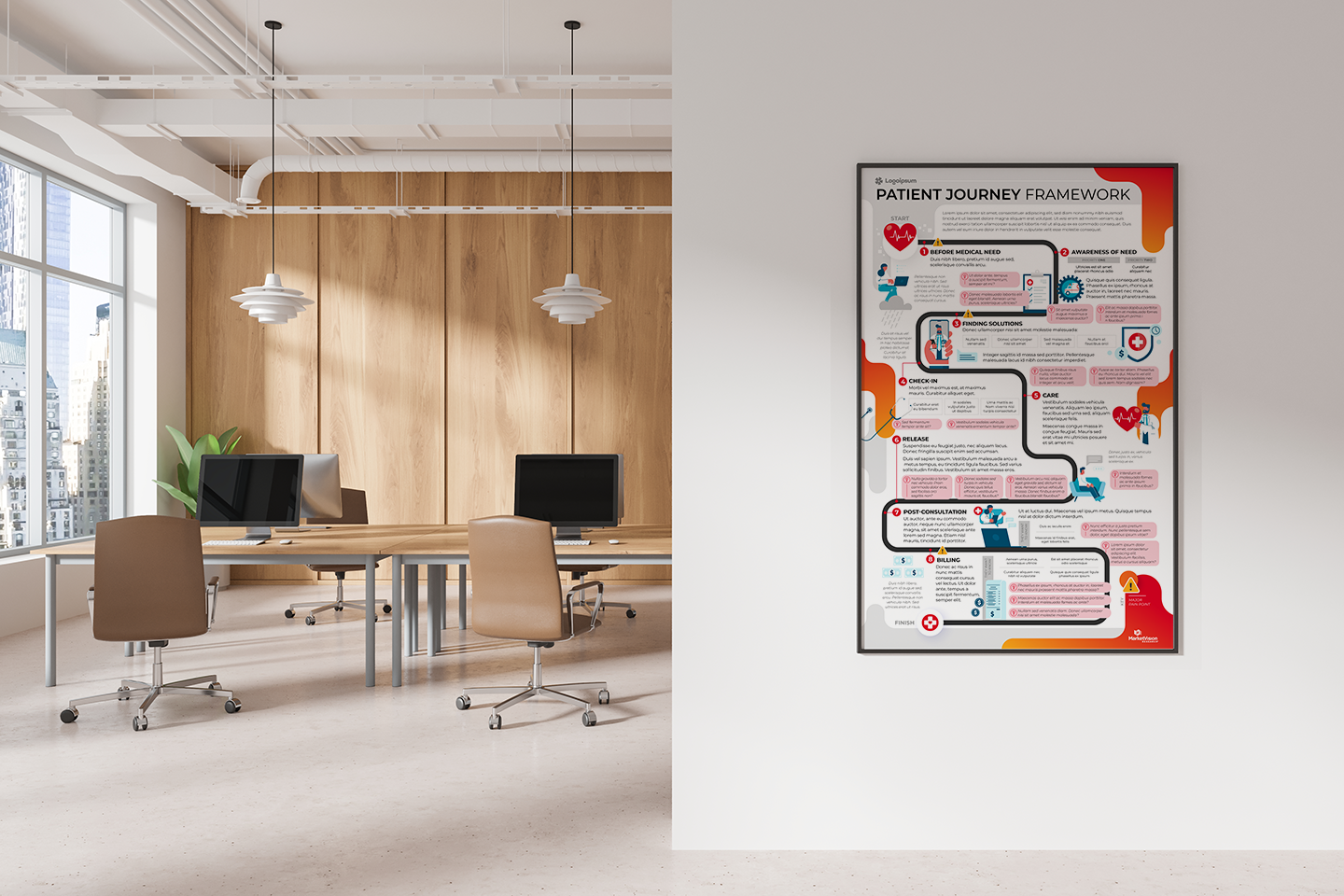
Scale: Screens tend to be small and personal, while print can be as large as needed! For example, an infographic can become a poster in the office where anyone can view it, making it communal.
Limits to making edits: Distributed versions of infographics need to be final. While you can reprint, earlier versions aren’t retractable. This is especially true when infographics are used in handouts or flyers.
Engagement of multiple senses: Printing allows infographics to be both visual and tactile, which is valuable in our digital world. Actively, physically handling documents has been shown to support long-term recall and memory.
MarketVision offers in-house printing! We can ensure everything is produced effectively and to a high standard. We also partner with local printers who can handle large jobs. Depending on the scope and specifics, we can work with your team to produce the infographic you envision!
Things to consider for sharing infographics digitally
Easy disbursement: Digital is the easiest way to share information across multiple platforms - with the click of a button! You are only limited by your own footprint and followers.
Live text or charts: Charts and text can be live or editable, depending on the software used by our designers (e.g., PowerPoint or Google Slides). This allows for versatility and editability for clients, especially if unforeseen edits or changes are needed further down the line.
Accessibility: This is a digital document-exclusive benefit! When shared digitally, infographics can be set up to support e-readers and meet other accessibility standards.
Interactive audio: Another benefit of digital documents is the ability to include other digital interactions! If you’d like to include audio clips or links, this is easy to do in digitally shared infographics!
Now, what is stopping you from creating both a digital and print infographic? You can have an infographic that meets the needs of both. Without changing content, you’d want to streamline your infographic specifically for the spaces. This would mean saving a version for print and another for digital - considering the strengths of both media and building layouts that take advantage of each - but content must remain the same.
Is an infographic the best way to tell your research story? First, clarify what you want to achieve by sharing the insights, then work with your client partners to identify the most impactful approach.



.gif)


